Sandwich panel cores: what you need to know
Aluminium honeycomb, Nomex®, Polypropylene, Pet and PVC: properties, benefits and selection criteria
Caricamento tempo di lettura... | 24.06.2026The choice of core material has a direct impact on the mechanical and functional performance of a sandwich panel. While the face skins play a crucial role in carrying tensile and compressive loads, the core largely determines how the panel behaves under compression, concentrated loads and service conditions. Thermal insulation, acoustic performance, durability and weight are also strongly influenced by the type of core selected.
As a result, core selection should never be treated as a secondary design decision. Different materials have been developed to address different engineering challenges, and the most suitable solution will depend on the specific requirements of the application rather than on any single performance parameter.
The role of core in a sandwich structure
The core is designed to separate the outer skins of the panel while transferring loads between them. This configuration is what enables sandwich structures to achieve high levels of stiffness while maintaining a low overall weight. Reducing weight without compromising mechanical performance is one of the primary objectives of composite engineering. The core plays a central role in achieving this balance, influencing stiffness, strength, durability and the way the component is assembled. The choice of core material also affects how the panel performs under load, its ability to accommodate inserts and mechanical fixings, its resistance to moisture, its response to dynamic stresses, its insulation properties and, in many cases, its ability to meet specific regulatory requirements.
Honeycomb and structural foams: two core families

The cores used in sandwich panels can be broadly divided into two main categories: honeycomb cores and structural foams. Honeycomb cores feature a cellular structure that allows a minimal amount of material to deliver high stiffness. This configuration provides an excellent strength-to-weight ratio and is therefore widely used in applications where lightweight construction is a key requirement.
Structural foams, on the other hand, have a continuous material structure throughout the core. This offers advantages in handling localised loads, ease of machining and the integration of fixing and assembly systems. The choice between honeycomb and foam is therefore not a question of material quality, but rather of project requirements and the operating conditions the panel will be exposed to.
Aluminium honeycomb
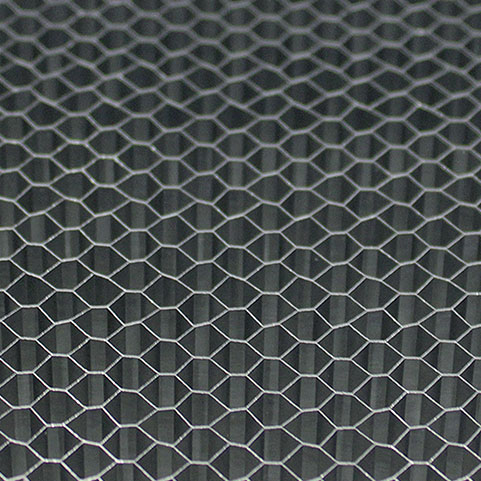
Aluminium honeycomb is one of the most widely used core materials in the sandwich panel industry. Its cellular structure makes it possible to produce extremely lightweight panels while maintaining excellent flexural performance. For this reason, it is used across a wide range of industries, including transportation, marine, industrial automation and architectural applications. The main advantage of aluminium honeycomb lies in its outstanding stiffness-to-weight ratio. In applications where weight reduction is a critical design factor, it remains one of the most established and widely adopted solutions.
Nomex® honeycomb
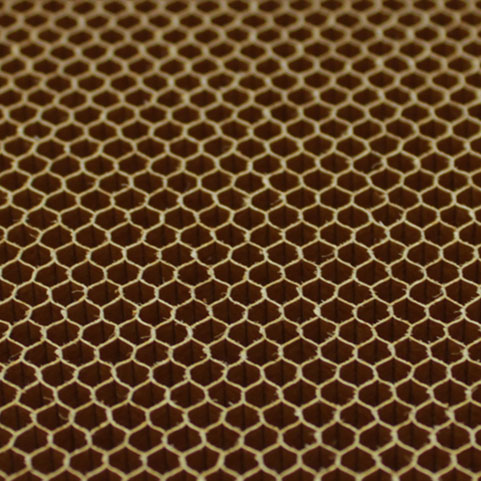
Nomex® honeycomb is manufactured from aramid paper impregnated with phenolic resin and was originally developed for aerospace applications. Today, it remains one of the preferred solutions when maximum weight reduction must be combined with high mechanical performance and stringent fire safety requirements.
These characteristics make it particularly attractive for the rail, aerospace and marine sectors, where weight, safety and regulatory compliance play a critical role. Compared with many other core materials, Nomex® offers an excellent strength-to-weight ratio while also providing improved vibration damping and acoustic comfort in certain applications. Its non-metallic structure also delivers good resistance to moisture and corrosion, extending its suitability across a wide range of industrial environments.
Polypropylene honeycomb
Polypropylene honeycomb combines lightweight construction with excellent moisture resistance and good chemical resistance. Its cellular structure helps minimise panel weight, while the polymer-based material performs well in aggressive environments and high-humidity conditions.
These characteristics have led to its widespread use in sectors such as marine, light transportation, industrial fit-outs and building applications. Thanks to its lightweight structure and ability to distribute light evenly, it is also used in backlit natural stone panels and other translucent materials.

PET Foam
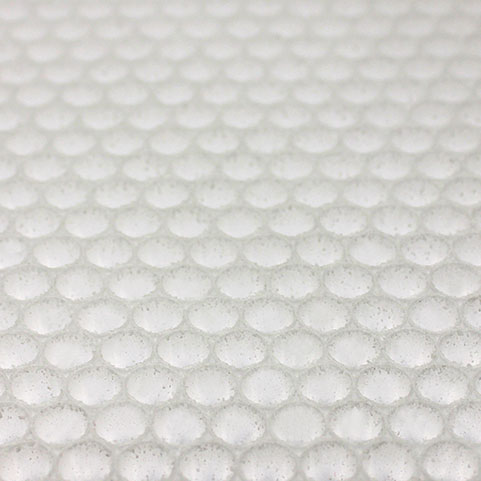
PET foam has experienced significant growth in recent years thanks to its balanced combination of mechanical performance, ease of processing and sustainability. Its uniform cellular structure ensures effective load distribution and makes PET particularly suitable for applications requiring mechanical fixings, inserts or machining operations.
Compared with honeycomb cores, PET foams generally offer a simpler approach to managing localised loads while providing greater design flexibility. Another key advantage is ease of machining. CNC routing, shaping and other processing operations can be carried out relatively easily, simplifying the integration of sandwich panels into more complex assemblies. As a result, PET foam is now widely used in transportation, marine, technical construction and industrial applications.
PVC Foam
PVC foam is one of the most established structural core materials used in the composites industry. Its popularity is largely due to its ability to offer a good balance of mechanical performance, moisture resistance, impact absorption and ease of processing. These characteristics make it particularly suitable for applications exposed to vibration, cyclic loading and demanding environmental conditions.
Its ability to be easily machined and shaped also helps simplify manufacturing processes and integration into the final component. For these reasons, PVC foam continues to be widely used in the marine, industrial, energy and transportation sectors.

Selection Criteria
Selecting the right core material for a sandwich panel depends on a number of factors. Some guidelines:
Weight and Stiffness: When minimising weight while maintaining high stiffness is the primary objective, honeycomb cores are generally the most effective solution. Aluminium and Nomex® honeycombs are widely used in applications where weight-to-performance ratio is a critical design parameter.
Localised Loads and Mechanical Fixings: Where the panel must accommodate mechanical fixings, inserts or anchoring points, it is important to evaluate how the core behaves under localised loads. Structural foams provide greater material continuity, while honeycomb cores may require specific solutions to distribute stresses effectively. The most suitable option depends on the type of fixing, the expected loads and the overall panel design.
Operating Environment: In environments exposed to moisture, water or chemicals, materials such as polypropylene honeycomb, PET foam and PVC foam provide good resistance to aggressive conditions and long-term durability.
Manufacturing Process and Sustainability: Manufacturing requirements and sustainability objectives can also influence material selection. PET foam and polypropylene honeycomb are particularly attractive in projects where recyclability and environmental impact are important considerations.
Core selection is one of the factors that most significantly influences the performance of a sandwich panel. Aluminium honeycomb, Nomex®, polypropylene, PET and PVC each address different engineering requirements and provide designers with different ways of achieving specific targets in terms of weight, stiffness, strength and durability. Understanding the characteristics of each core material allows engineers and designers to develop more efficient sandwich panel solutions, optimising the balance between performance, weight and cost according to the needs of the application.
Our technical team supports the selection of the most suitable material, integrating mechanical, production, and regulatory requirements.
Contact us
Related articles

Sandwich panels: what they are and where they are used

Reverberation control in indoor environments: acoustic principles and technical solutions for contemporary architecture
Carbon fibre sandwich panels: materials, configurations and high-performance applications
Resources & Contacts
Looking for more information or technical advice on the most suitable panel for your project?