Sandwich panels for the construction industry
Sandwich panels for the construction industry are multilayer elements used for cladding, ventilated façades, suspended ceilings, partition walls and floors, as well as backing for natural stone and restoration work.
Caricamento tempo di lettura... | 19.10.2026Sandwich panels for the construction industry are multilayer elements used for cladding, ventilated façades, suspended ceilings, partition walls and floors, as well as backing for natural stone and restoration work. The combination of strong skins and a lightweight core makes it possible to design components whose weight, stiffness and surface finish meet different requirements.
Performance depends on the panel configuration and the system in which it is installed. Materials, thicknesses, adhesive bonds, edges and fixings must therefore be selected according to the function of the component and its service conditions.
What are sandwich panels used in construction
A sandwich panel consists of two outer skins bonded to a central core. The skins contribute to bending strength, while the core keeps them apart and transfers shear stresses. The adhesive bond enables the layers to work together. In construction, this structure can meet different requirements. Insulated panels are mainly used where the primary function is thermal insulation for roofs and building enclosures. Panels with honeycomb or structural foam cores are also selected for their stiffness, weight reduction and ability to accommodate surface coverings. Where thermal insulation is required, the choice takes into account the thermal conductivity of the core, thicknesses and the layer build-up of the element. In sandwich panels, the combination of skins and core therefore allows the structure to be adapted to the functions required by the project.
Choosing materials for skins and cores
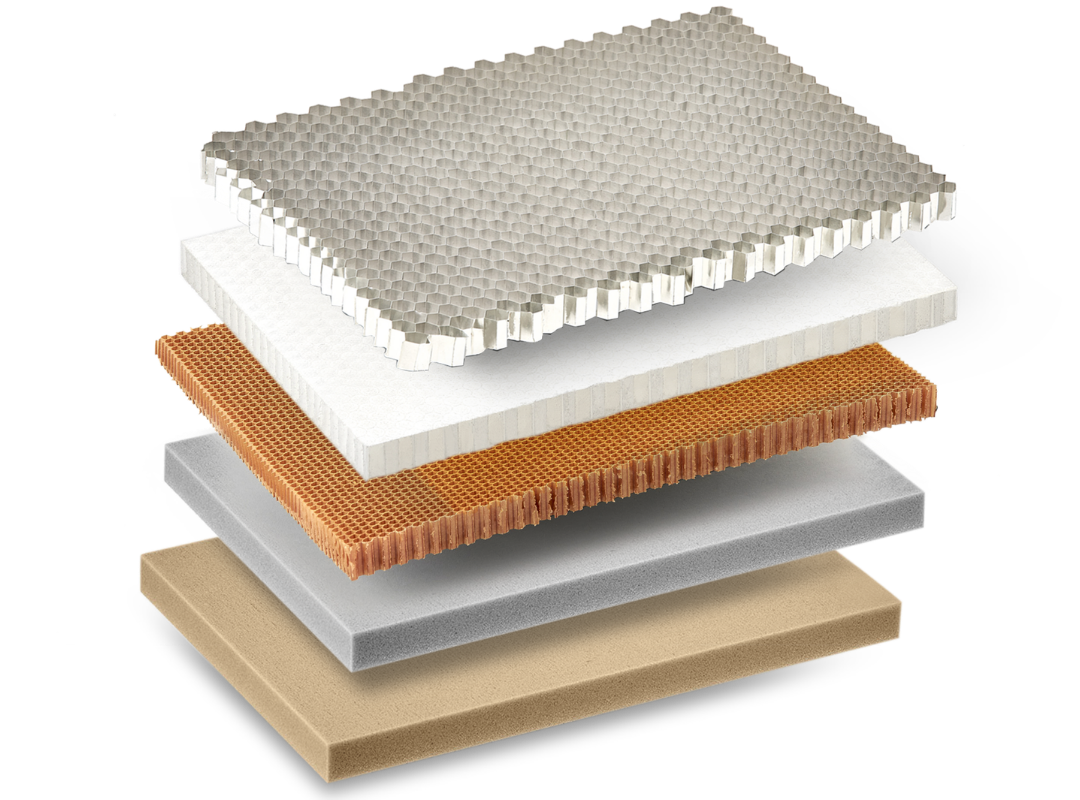
The choice of materials for a construction sandwich panel depends on the expected loads, environmental exposure, finishes and machining requirements. Aluminium skins can be used for panels with metal surfaces, while glass fibre skins are also used for backing panels intended for bonding to natural stone. Aluminium honeycomb is a core with hexagonal cells used where stiffness and low weight need to be combined. Cell size, foil thickness and core height all contribute to the behaviour of the panel. PET, PVC and PMI foams form another family of structural cores. Density affects mass and mechanical properties: when selecting a PET foam or an expanded PVC core, the material data must be assessed against the expected loads and machining requirements.
Aluminium sandwich panels for cladding and technical components
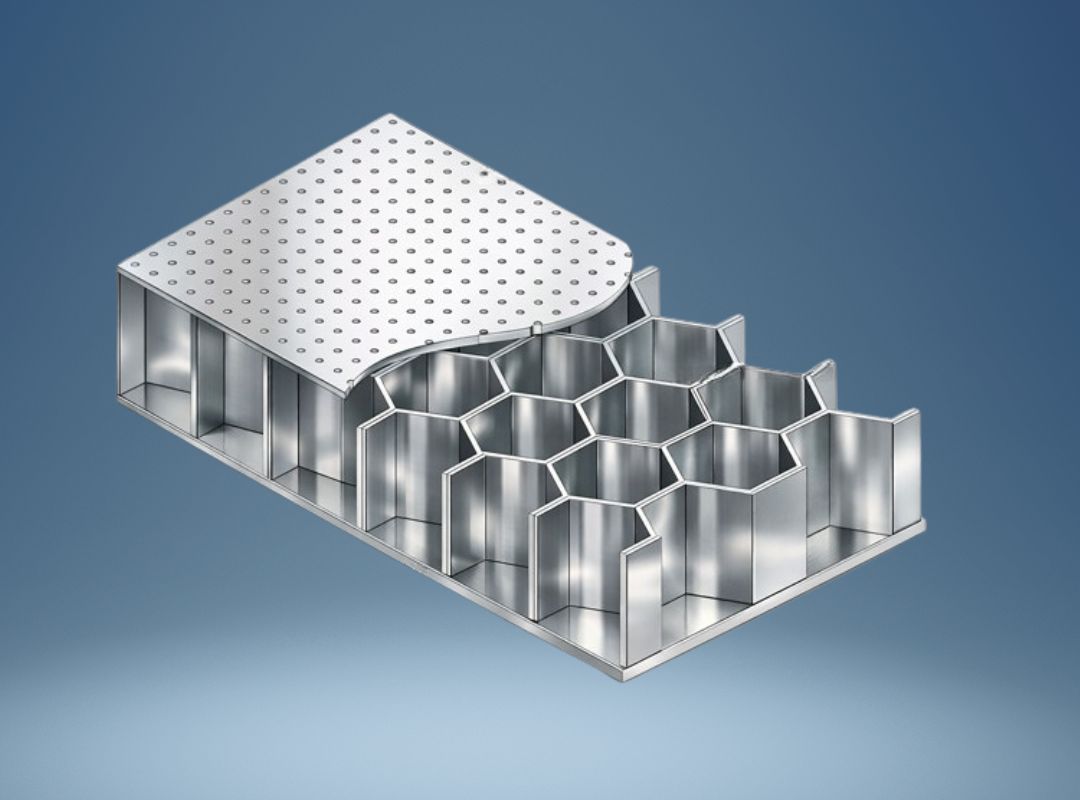
Sandwich panels with aluminium skins and cores are used in construction for cladding and components that require low weight, stiffness and machinability. Surfaces can be supplied unfinished, primed or finished, according to the intended use of the component. COMPOCEL AL consists of aluminium skins bonded to an aluminium honeycomb core. Its aluminium sandwich structure produces rigid, lightweight elements that can be adapted for cladding and technical components. Sizing the skins, core and connections makes it possible to define the mechanical behaviour of the component in relation to the loads and the span between supports.
Suspended ceilings and reverberation control
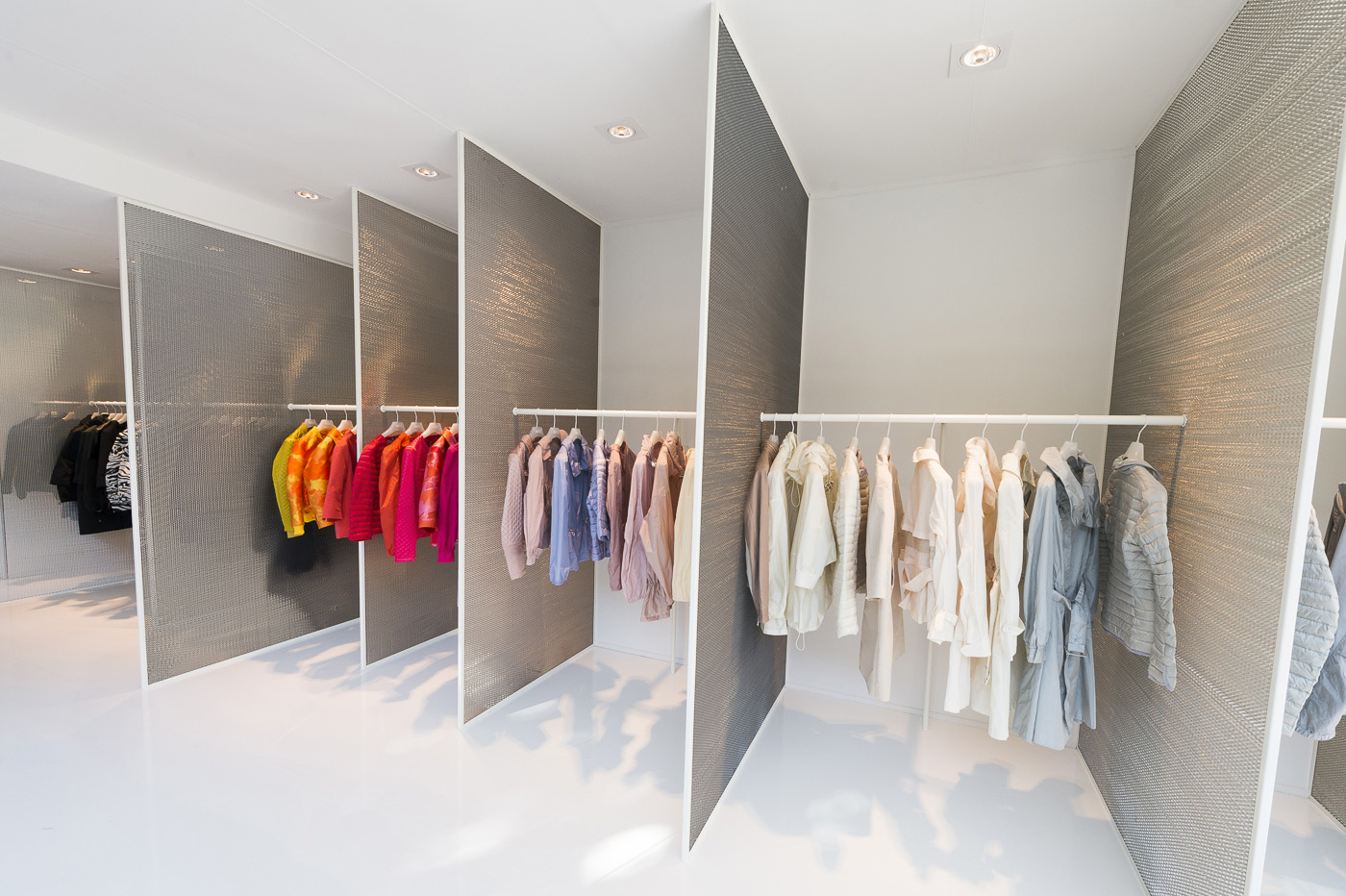
For suspended ceilings, a lightweight, rigid sandwich panel facilitates the production of large elements. The design defines the overall weight, suspension points and access to building services. For reverberation control, COMPOCEL SA combines an aluminium honeycomb core with a microperforated or micro-expanded metal surface. This configuration promotes sound absorption and makes it possible to produce sound-absorbing ceiling and wall linings. Panels can be fitted directly against the ceiling or suspended; mounting them at a distance creates an air cavity behind them that contributes to sound absorption. In combined climate control and acoustic applications, the configuration is coordinated with the acoustic and building services requirements of the space.
Partition walls and interior cladding
Partition walls and interior cladding can use sandwich panels with honeycomb or foam cores. The choice depends on the dimensions of the elements, the desired finish and the loads imposed by accessories or fixing systems. A panel can be supplied as a substrate to be covered or with a finished surface. Edge finishing and inserts help turn the panel into a component that can be incorporated into the project. In interiors and furnishings, this technology is used for walls, doors, furniture elements and modular systems.
Floors and walkable surfaces
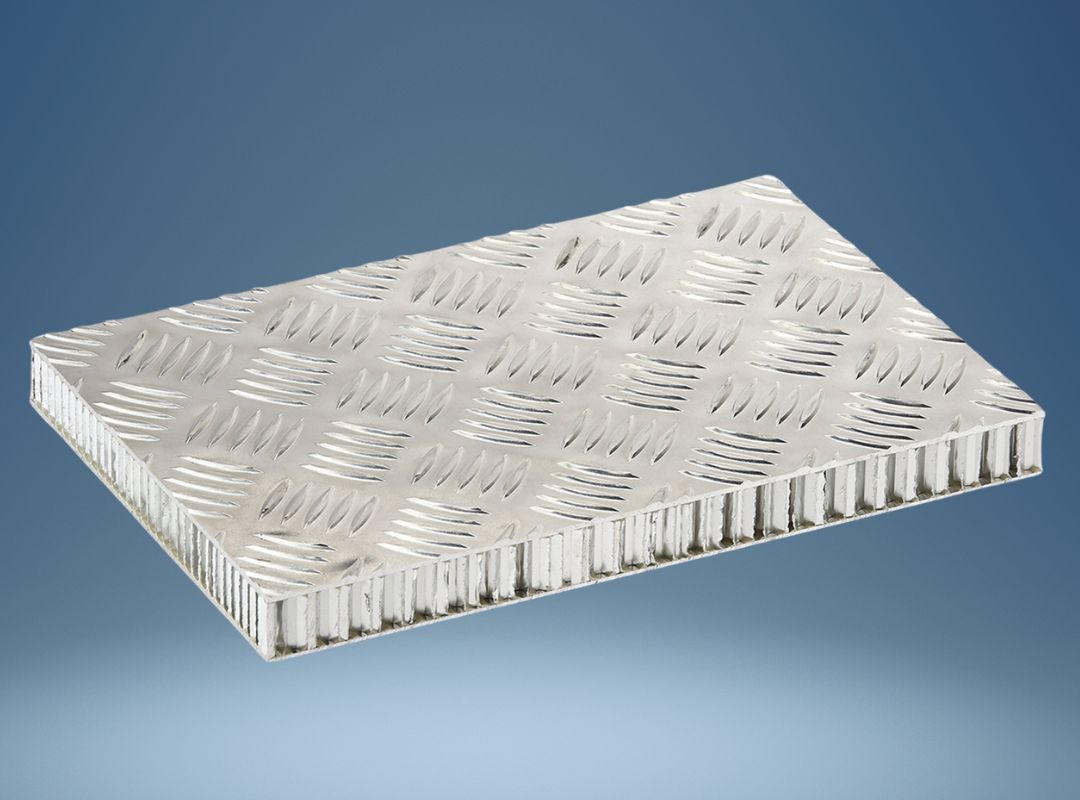
Sandwich panels for walkable flooring make it possible to create lightweight, rigid surfaces for interiors, ramps and technical areas. Sizing the skins and core, together with the arrangement of the supports, allows the design to accommodate the expected distributed and concentrated loads. COMPOCEL FLOOR ALURIS and ALUMAN have an aluminium honeycomb core and an aluminium upper skin with a rice-grain or chequered finish. They are used for flooring in technical rooms and machine rooms, and for non-slip platforms.
The design coordinates bending strength, allowable deflection, the compressive behaviour of the core and the connections. The choice of surface finish completes the system according to the service conditions and required slip resistance.
Reducing the weight of marble and natural stone
Reducing the weight of natural stone involves bonding a thin stone slab to a sandwich backing panel. The backing contributes to the stiffness of the element, while the stone remains the visible surface. This solution is used for cladding, countertops and interior architectural elements. The final weight includes the stone, panel, adhesive and accessories: weight savings must therefore be calculated for the complete component against the reference solution. The article on reducing the weight of marble with sandwich panels explores honeycomb and foam alternatives in more detail.

Backing panels for mosaics and restoration work
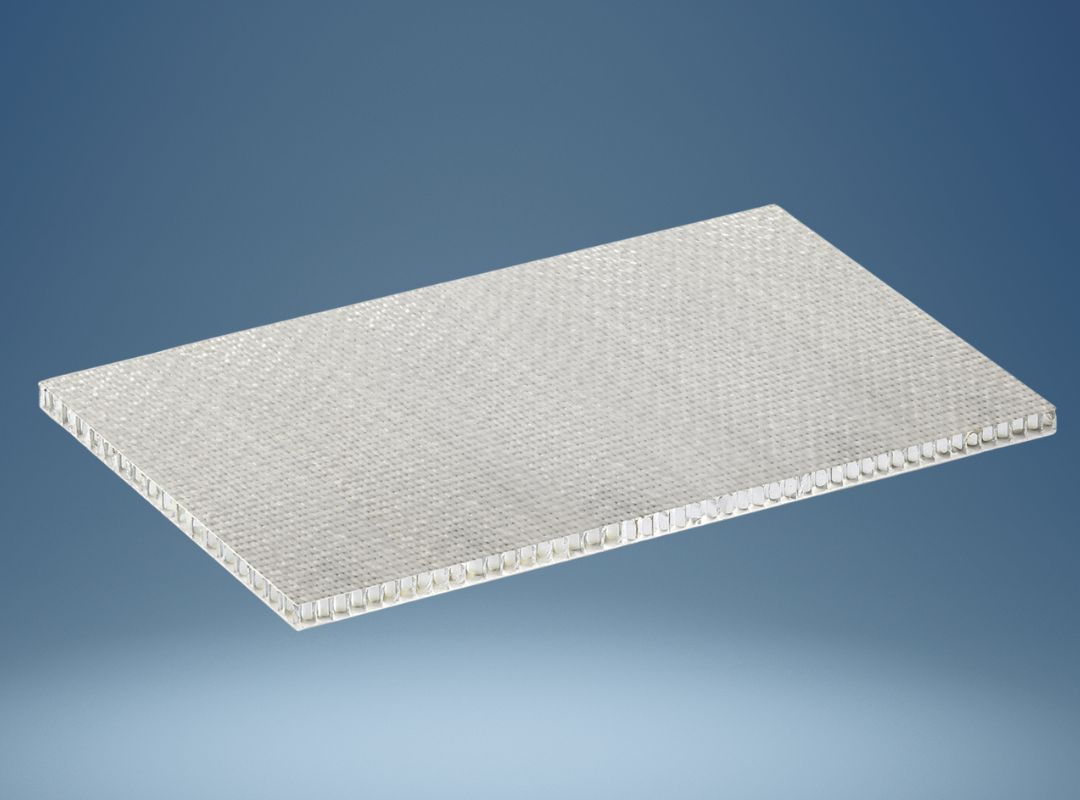
In restoration, sandwich panels can be used as lightweight backing panels for mosaics and detached frescoes. The choice takes into account stiffness, dimensions and the compatibility of the bonded assembly with the artwork and the conservation materials. Panels with an aluminium honeycomb core and glass fibre skins, such as ALUSTEP 500 SL, are also used for this work. The ability to shape the backing panel and incorporate inserts allows it to be adapted to the geometry of the artwork and to handling and installation requirements.
Machining and fixings to specify during design

Sandwich panel machining and finishing, such as cutting, milling, drilling and edge finishing, allow the panel to be adapted to the geometry and requirements of the building component. These operations are coordinated with support positions and installation details. Inserts, local reinforcements and perimeter profiles transfer and distribute the loads applied through the fixings. In honeycomb panels, the connection detail is designed to engage the skins and reinforcements at the anchoring points. In foam cores, density, geometry and the type of fixing contribute to the load-bearing capacity of the connection. Defining machining operations and fixings at the design stage makes it possible to coordinate the geometry, surface finishes and installation method of the finished component.
From project requirements to panel selection
The value of a sandwich panel in construction comes from matching material properties to the function of the component. Façades, suspended ceilings, floors and stone backing panels require dedicated configurations that combine low weight, stiffness and finish quality with installation and maintenance requirements.
Are you developing a construction project? Share your drawings, requirements and service conditions with the CEL Components technical team: discussing materials, machining and fixings can help you turn your design concept into a fully specified solution.
Related articles
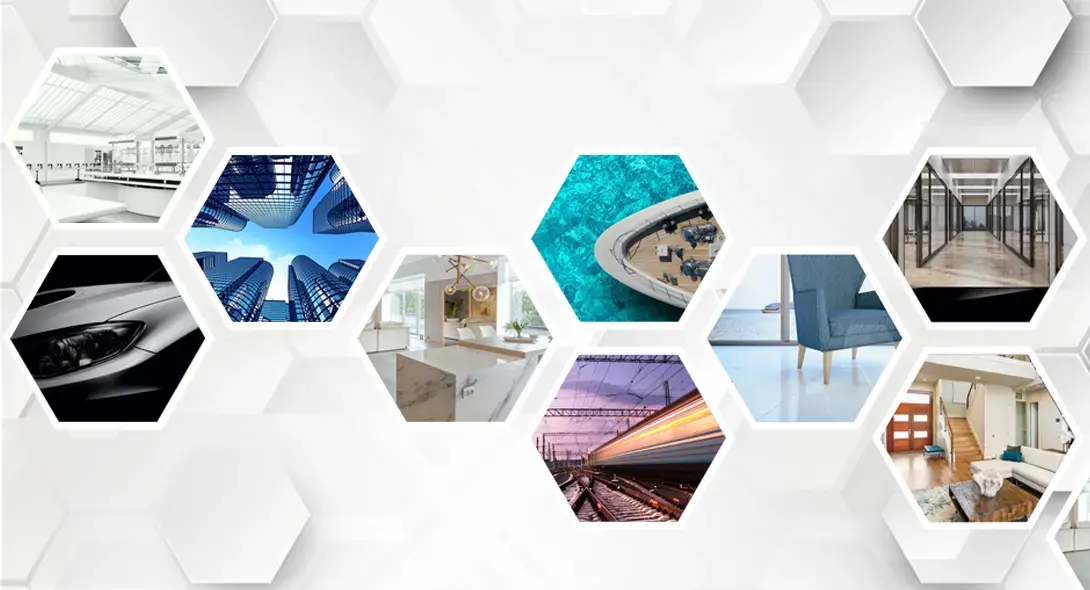
Sandwich panels: what they are and where they are used

Reverberation control in indoor environments: acoustic principles and technical solutions for contemporary architecture
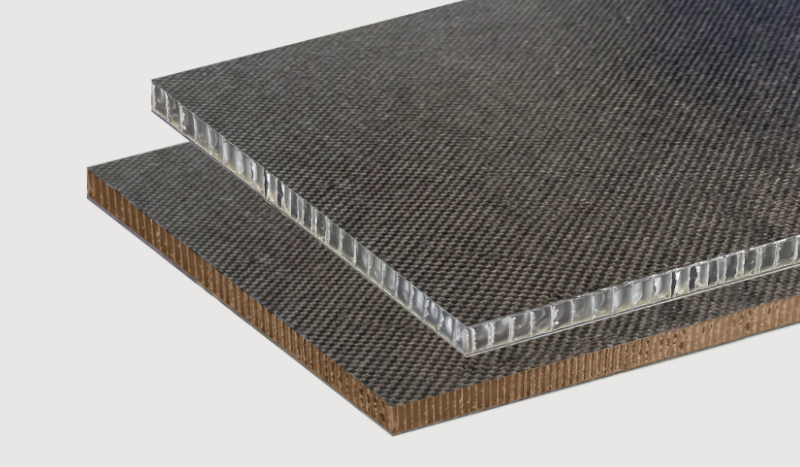
Carbon fibre sandwich panels: materials, configurations and high-performance applications
Resources & Contacts
Looking for more information or technical advice on the most suitable panel for your project?